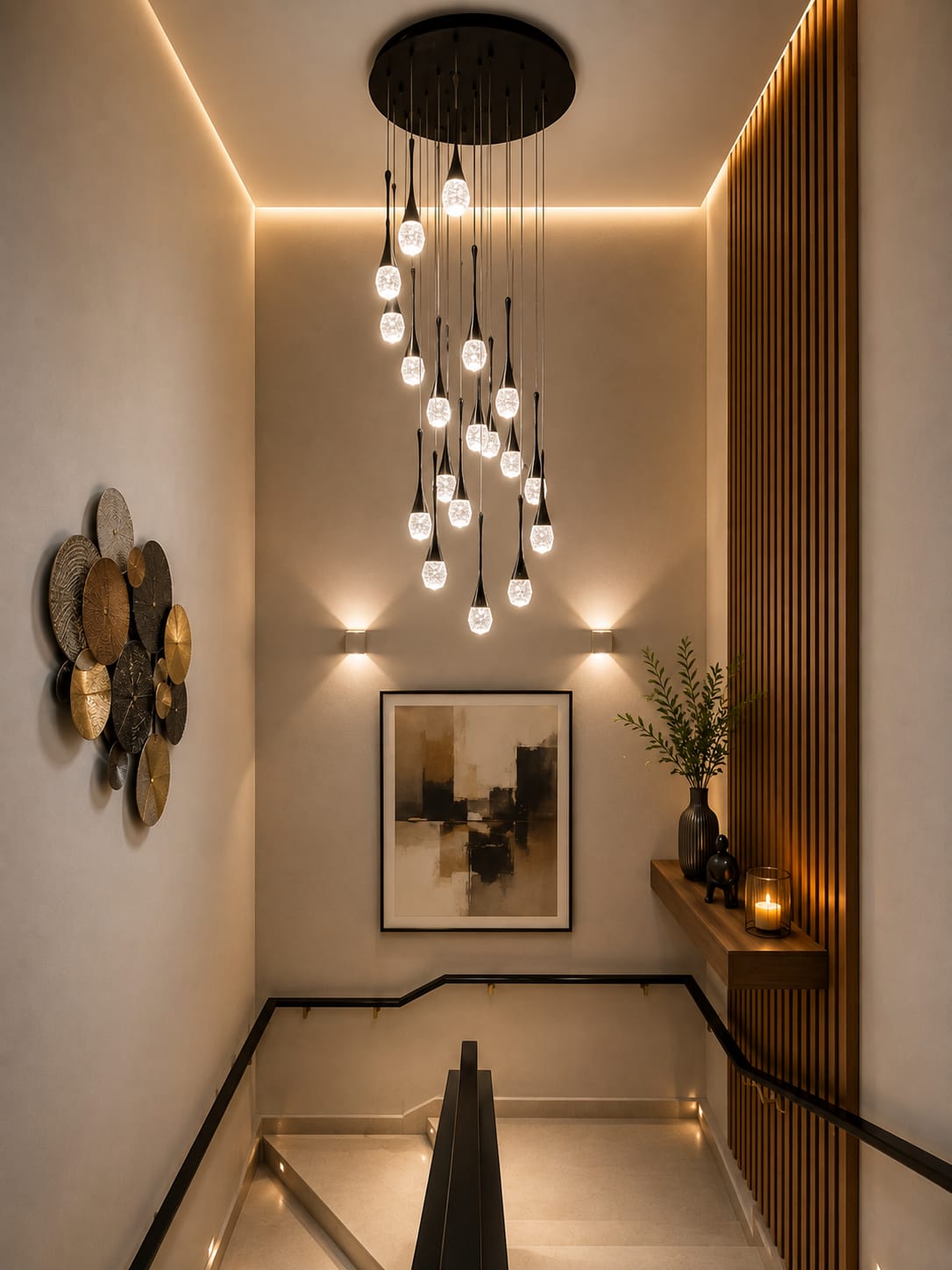
More and more people who come to us are asking for the same thing, even if they describe it differently. They want a home that feels quiet. Not cold, not empty, but calm and lived in. That look is often called warm minimalism, and it suits villa interiors in Dubai very well.
Here is how we think about it, and what we have learned from listening to homeowners over the years.
What warm minimalism actually means
Classic minimalism is about taking things away. Warm minimalism keeps that restraint but adds texture, softness and natural material, so the home still feels like a place to live rather than a gallery.
The idea is simple: fewer things, chosen with care, in materials that are pleasant to touch. A room can be almost bare and still feel generous if the surfaces are right.
Start with the palette
Warm minimalism leans on soft, earthy colours. Think sand, stone, clay, oatmeal, and muted browns, with a little off-white to let the eye rest. Pure bright white tends to feel hard in strong Dubai daylight, while a slightly warmer white feels gentler.
A good rule is to choose a small family of tones that sit close together, then let texture do the work of creating interest. When colours are quiet, the grain of timber or the weave of a rug becomes the detail people notice.
Materials that feel good to live with
Material is where warm minimalism succeeds or fails. A few that work well in a villa:
- Natural timber or timber-look veneers, with visible grain, for joinery, doors and wall panelling
- Stone or stone-effect surfaces with soft variation, rather than a perfectly uniform finish
- Lime-wash or textured plaster effects on feature walls
- Linen, wool and boucle fabrics for upholstery and curtains
- Matte or brushed metals in place of high-shine chrome
It helps to think about how a surface feels under the hand and how it will age. Honest materials usually look better with time, and that is part of the calm.
Let the light lead
Natural light is the most valuable material in any room. Before choosing finishes, we like to understand how the light moves through the villa across the day, because the same colour can look very different at midday and at dusk.
Layered curtains or sheers can soften harsh sun without closing the room off. In the evening, warm lighting at several heights, such as wall lights, lamps and concealed strips, will do far more for the mood than one bright ceiling fitting. Aim for warm, not yellow, and keep the lighting dimmable where you can.
Storage is what keeps it calm
Minimalism does not work if everyday objects are left out on every surface. The calm look depends on good storage planned from the beginning. Built-in joinery that sits flush with the walls lets a living room or bedroom stay clear, with everything having a home.
This is one reason we plan joinery early, alongside the layout, rather than adding furniture at the end.
Bring in softness and a little personality
A warm minimalist home is not anonymous. A few pieces with meaning, such as handmade ceramics, a single piece of art, or a well-loved chair, give a room its character. The trick is restraint: let each piece have space around it so it can be seen.
Plants help too. Even one or two well-placed ones bring a sense of life, and they connect nicely with a garden outside if your villa has one.
What to avoid
Warm minimalism is easy to get slightly wrong. These are the things we would steer clear of:
- Too many neutrals with no texture, which can make a room feel flat or sterile
- Mixing too many wood tones or stone types, which breaks the quiet
- Heavy decoration added at the end to fill space, which undoes the calm
- Cold white lighting, which works against the warm palette
- Following a trend so closely that the home stops reflecting the people who live in it
Make it yours
The best version of warm minimalism is never a copy of a photograph. It starts with how you live: whether you host often, whether children are running through, what you want to see when you walk in the door. We begin every project by listening, because the design should reflect your vision, not ours.
A few honest questions are a good place to start. What do you want each room to feel like? Which objects do you actually use every day? What bothers you about your current space? The answers shape the palette, the materials and the storage far more than any trend does.
If you are thinking about a calmer, more tactile home, we would be glad to talk it through with you. There is no pressure, just a conversation about what you have in mind.
Let’s talk about your space
No obligation and no hard sell. We will listen first.