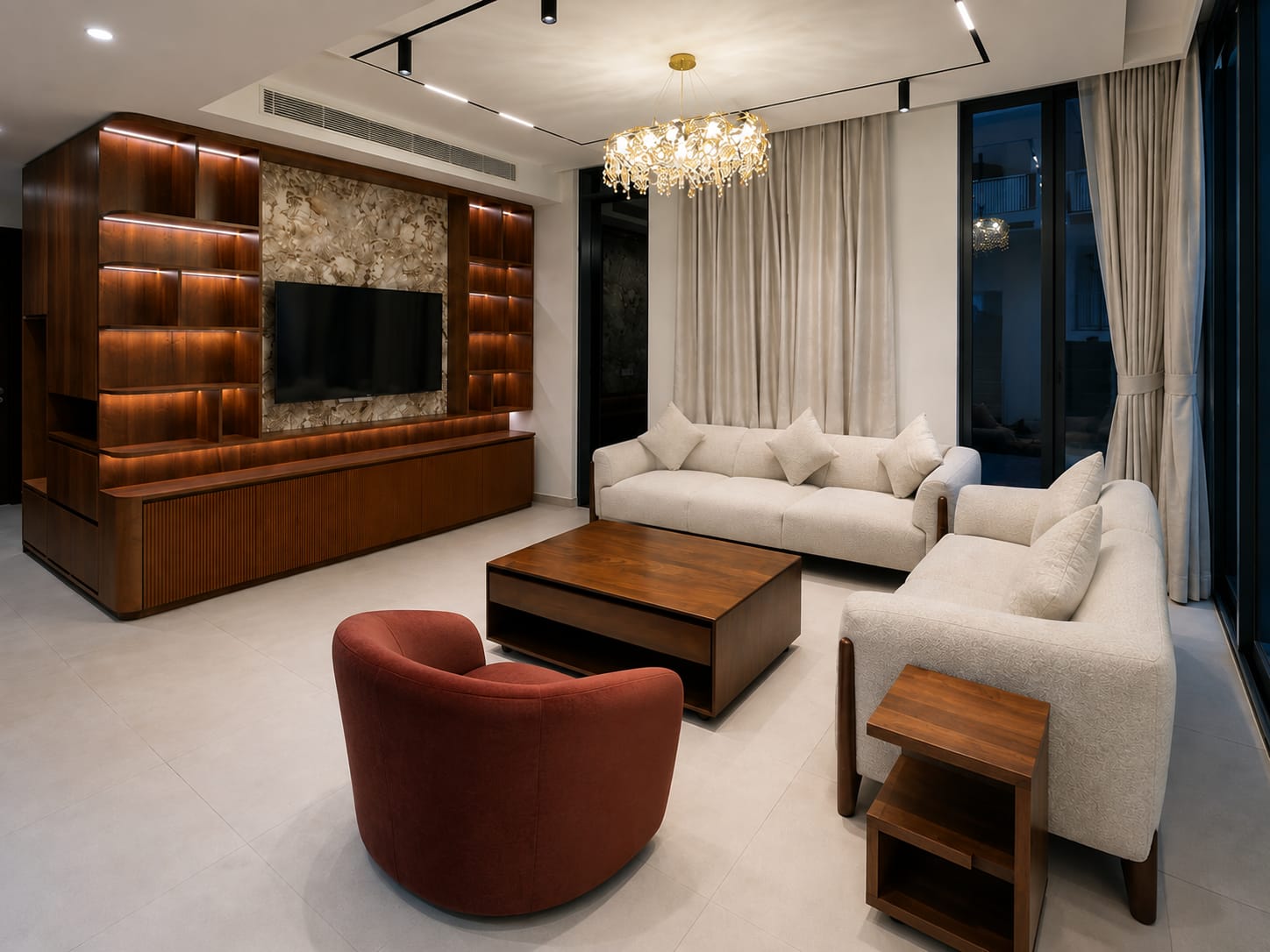
It is usually one of the first questions we are asked: how long does a fitout take in Dubai? The honest answer is that it depends on the space, the scope and the decisions along the way. What we can offer is a realistic picture of how a villa or office project unfolds, so you can plan with confidence.
The short answer
For our projects, the time from first consultation to completion is typically one to three months, depending on scale. Some smaller projects have been completed in as little as 20 days. Larger or more complex spaces take longer, and it is better to hear that early than to be surprised later.
Treat these as a general guide rather than a promise. Your own timeline will depend on the details of your project, and we would always talk it through with you before you commit to anything.
Phase one: consultation and discovery
Everything begins with listening. We meet to understand how you live or work, what you want the space to feel like, what your budget is and when you would like to be finished. For an existing space, we also look at the site itself.
This phase is usually quick, but it matters most. A clear brief at the start saves time later, because fewer things need to be changed once work begins.
Phase two: concept and design
Next comes the concept: layouts, materials, colours, lighting and joinery ideas, presented in a way that is easy to react to. You respond, we refine, and the design settles into something you feel sure about.
How long this takes often depends on how quickly decisions can be made. Projects with one clear decision maker tend to move faster than those where several people need to agree.
Phase three: development and planning
Once the design is agreed, it is developed into detail: drawings, specifications, material selections and a programme of works. This is where we plan with purpose, working out the order of the trades and when materials need to arrive.
Approvals can sit within this stage. Requirements vary by building and community, so you should confirm what applies to your property with your building management or the relevant authority. Asking early is one of the simplest ways to protect your schedule.
Phase four: fitout and build
This is the visible part, where the space takes shape. Typically it moves through demolition or preparation, building work, services, ceilings and walls, joinery, finishes and then fixtures. One team managing the whole sequence helps each trade follow the last without gaps.
Phase five: handover
At the end comes the final detail: checking every finish, correcting anything that is not right, installing furniture and styling the space. We would rather take a little longer here than hand over something that is nearly right. Then the space is yours.
What can speed a project up
- A clear brief and a realistic budget agreed at the beginning
- Quick, confident decisions on design and materials
- Early confirmation of any building or community requirements
- Choosing materials that are readily available rather than special orders
- A single point of contact so questions are answered without delay
What can slow it down
- Changes to the design after building has started
- Long lead times on imported or custom materials
- Waiting on approvals or access arrangements from the building
- Unexpected conditions found once walls or ceilings are opened
- Gaps between decisions while several people review
None of these is unusual. The aim is not to avoid every surprise but to plan for them and communicate honestly when they appear.
Villa or office: any difference?
The phases are much the same. A villa tends to involve more personal decisions about joinery, finishes and the way a family lives, while an office often involves coordinating layout, acoustics, lighting and sometimes working around a team that needs to move in by a fixed date. If you have a deadline, such as a lease start or an event, tell us at the outset so we can plan backwards from it.
A calm way to plan
If you are weighing up a project, a good first step is to write down your ideal finish date and the things that matter most, whether that is speed, budget or detail. Then let us look at what is realistic. We will tell you plainly what we think is achievable.
If you would like to talk through your own timeline, we would be glad to start a conversation, with no pressure.